Product Overview
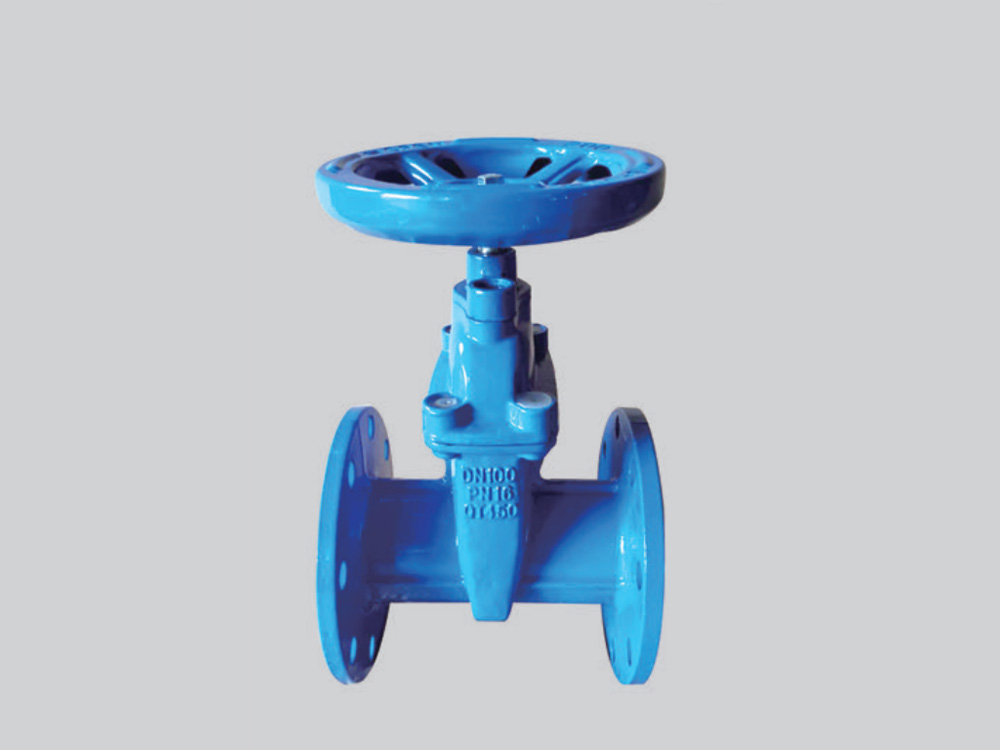
The opening and closing component of the small body concealed rod elastic seat sealing gate valve is the gate plate, and the movement direction of the gate plate is perpendicular to the fluid direction. The gate valve can only be fully opened and fully closed, and cannot be adjusted or throttled. The gate valve has two sealing surfaces, and the two sealing surfaces of the commonly used mode gate valve form a wedge shape. The wedge angle varies with the valve parameters, usually 50 degrees, and 2 ° 52 'when the medium temperature is not high. The gate of a wedge gate valve can be made as a whole, called a rigid gate; It can also be made into a gate that can produce slight deformation, and with its processability, it can compensate for the deviation of the sealing surface angle during the processing. This type of gate is called an elastic gate, usually connected by flanges.
Usage requirements
1. The specifications and categories of concealed soft seal gate valves should comply with the requirements of the pipeline design documents.
2. The model of the elastic seat seal gate valve should indicate the national standard number requirements it is based on. If it is an enterprise standard, the relevant description of the model should be indicated.
3. The working pressure of the concealed rod elastic seat sealing gate valve should be ≥ the working pressure of the pipeline. Without affecting the price, the working pressure that the valve can withstand should be greater than the actual working pressure of the pipeline; Under the closed condition of the concealed rod elastic seat sealing gate valve, any side should be able to withstand 1.1 times the valve working pressure value without leakage; When the valve is open, the valve body should be able to withstand twice the working pressure of the valve.
4. The manufacturing standard for concealed rod elastic seat sealed gate valves should specify the national standard number used. If it is an enterprise standard, the procurement contract should be accompanied by the enterprise documents.
leave a comment