Product Overview
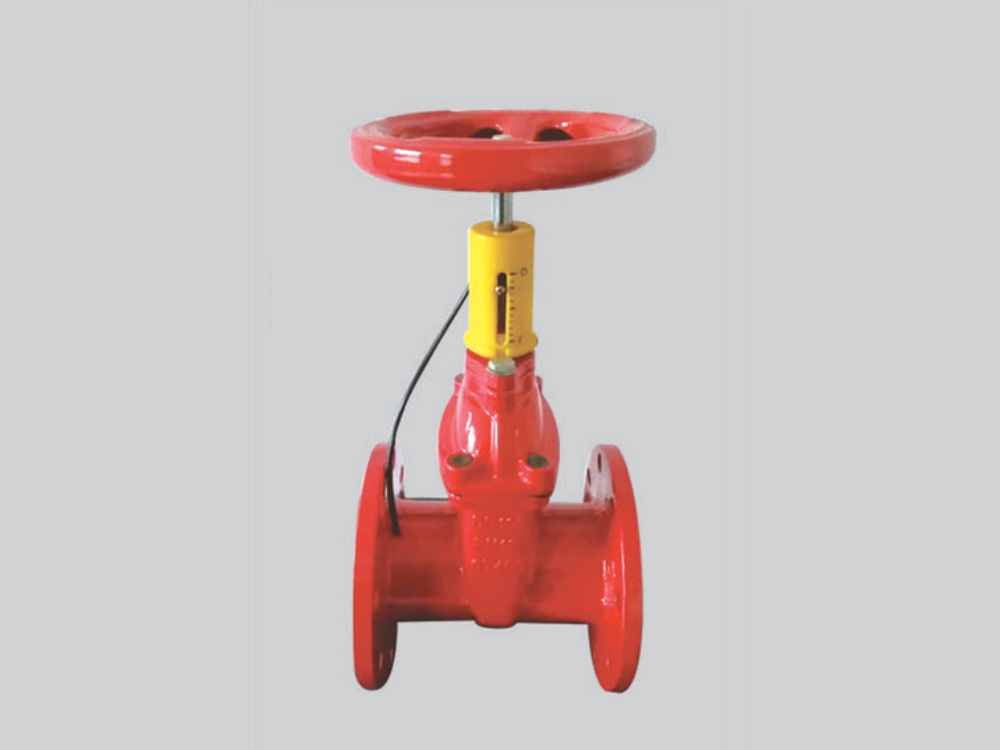
The opening and closing component of the Zhongti Signal Elastic Seat Sealing Gate Valve is the gate, and the direction of movement of the gate is perpendicular to the fluid direction. The gate valve can only be fully opened and fully closed, and cannot be adjusted or throttled.
The medium body signal elastic seat sealing gate valve can be used to control the flow of various types of fluids such as air, water, steam, various corrosive media, mud, oil, liquid metal, and radioactive media. The gate valve has two seals, and the two sealing surfaces of the commonly used mode gate valve form a wedge shape. The wedge angle varies with the valve parameters, usually 50 degrees, and 2 ° 52 'when the medium temperature is not high. The gate of a wedge gate valve can be made as a whole, called a rigid gate; It can also be made into a gate that can produce slight deformation to compensate for the deviation of the sealing surface angle during the processing. This type of gate is called an elastic gate. Signal gate valves are generally installed horizontally. The types and sealing surface configurations of Zhongti Signal Elastic Seat Gate Valve can be divided into Wedge Gate Valve and Parallel Gate Valve. Wedge Gate Valve can also be divided into Single Gate, Double Gate Plate, and Elastic Gate Valve; Parallel gate valves can be divided into single gate plate and double gate plate. According to the thread position of the valve stem, it can be divided into two types: rising stem gate valves and hidden stem gate valves.
When the signal soft seal gate valve is closed, the sealing surface can be sealed solely by the medium pressure, that is, the sealing surface of the gate is pressed against the valve seat on the other side by the medium pressure to ensure the sealing surface is sealed, which is called self sealing. Most gate valves use forced sealing, which means that when the valve is closed, external force must be used to forcefully press the gate plate against the valve seat to ensure the sealing performance of the sealing surface.
The gate valve of the medium body signal elastic seat sealed gate valve moves in a straight line with the valve stem, which is called a lift rod gate valve. Usually, there are trapezoidal threads on the lifting rod. Through the nut of the valve and the guide groove on the valve body, the rotation is converted into linear motion, that is, the operating torque is converted into operating thrust.
When opening the valve, when the height of the gate is equal to 1:1 times the diameter of the valve, the fluid channel is opened, but this position cannot be monitored during operation. In actual use, the vertex of the valve stem is used as a marker, that is, the position where it cannot be opened, as its fully open position. To consider the phenomenon of locking due to temperature changes, it is usually done by opening the valve to the top position and then reversing it by 1/2-1 turn as the position for fully opening the valve. Therefore, the fully open position of the valve is determined by the position of the gate (i.e. stroke). Some gate valves have the stem nut set on the gate, and the handwheel rotates to drive the stem to rotate, thereby lifting the gate. This type of valve is called a rotary stem gate valve or a concealed stem gate valve.
leave a comment